Pantry pest infestations in Montgomery County residential properties often begin with contaminated store-bought dry goods, pet foods, or birdseed that introduce larvae into warm, enclosed kitchen cabinets. In historic…
Pantry pest infestations in Montgomery County residential properties often begin with contaminated store-bought dry goods, pet foods, or birdseed that introduce larvae into warm, enclosed kitchen cabinets. In historic neighborhoods like South Park and the Dayton View Historic District, older wood cabinetry and built-in larder shelving provide deep seams where larvae pupate out of reach of store-bought aerosol sprays. Attempting to manage an outbreak with grocery store foggers disperses adult moths or beetles deeper into wall voids without neutralizing the larvae feeding inside cereal boxes, rice sacks, and flour bins.
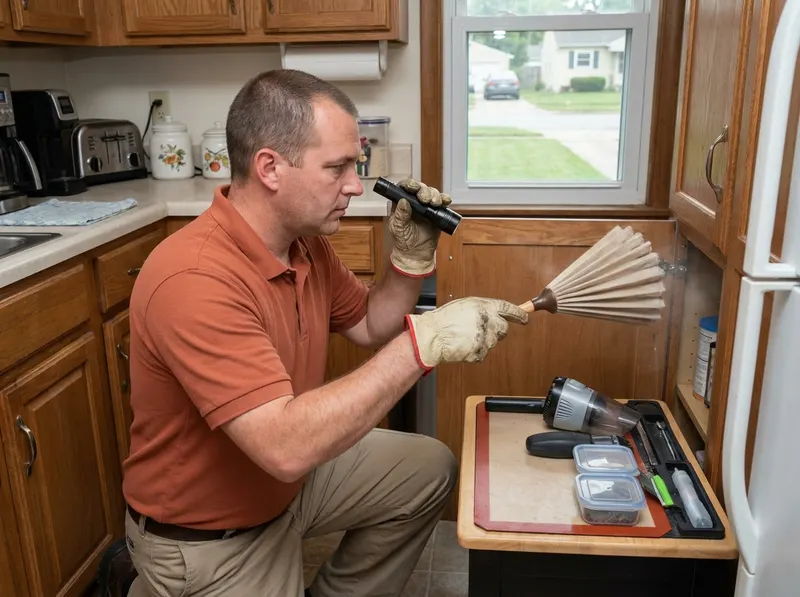
Professional remediation establishes a clinical perimeter around food storage zones. In areas like Belmont and Walnut Hills, technicians inspect every accessible pantry shelf, baseboard joint, and cabinet hinge, physically extracting insect casings and webbing using HEPA-filtered extraction equipment. Treatments focus exclusively on non-food contact cracks and perimeter gaps using targeted, eco-conscious materials that prevent immature insects from maturing into breeding adults, safeguarding pantry dry goods without contaminating food prep surfaces.
Residents near Five Oaks and RiverScape MetroPark benefit from complete root-source eradication over repeated monthly chemical reapplications. Once contaminated items are segregated and structural gaps are treated, technicians provide clear exclusion protocols—such as transferring bulk grains to airtight glass or heavy plastic containers—ensuring long-term structural defense against reinfestation.
Every job gets a firm, written price after a free on-site visit.
Tell us about your stored product & pantry pest remediation job in Dayton and we'll send a clear, written quote — usually the same day.
 Alernov Pest Control Services