Securing a professional pest control service Dayton property owners can rely on stops immediate insect or rodent destruction before structural integrity is compromised. Technicians systematically inspect foundations, crawl spaces, and attic voids to eliminate active harborages rather than masking symptoms with surface chemicals.

A professional pest control service in Dayton is a targeted structural and biological management intervention that identifies, eradicates, and mechanically excludes invasive insect and rodent populations from residential and commercial properties.
Every service reflects the same meticulous attention to detail — whether it's a single job or a larger pest control service project across Dayton.
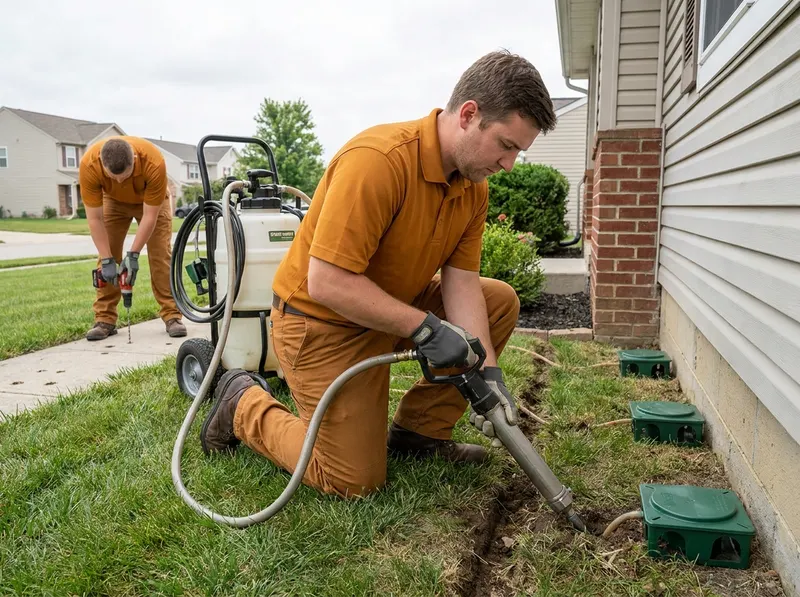
Subterranean termites cause severe structural destabilization by consuming cellulose within sill plates, floor joists, and wall studs from the inside out. Treatment protocols begin with a full perimeter foundation assessment, inspecting crawl spaces, slab joints, and basement header zones for active mud shelter tubes. Technicians install continuous liquid soil barriers using advanced non-repellent termiticides along exterior foundation trenches and inject material beneath concrete slabs and porches. For non-invasive long-term suppression, slow-acting subterranean baiting stations containing chitin-synthesis inhibitors are embedded flush in the soil around the structural perimeter at ten-foot intervals. Worker termites feed on the bait matrix and transfer the active ingredient throughout the subterranean colony, halting molting cycles and causing complete colony collapse. Structural wood members showing active damage receive localized direct void injections of expanding bio-foam to arrest active gallery progression immediately.
View details →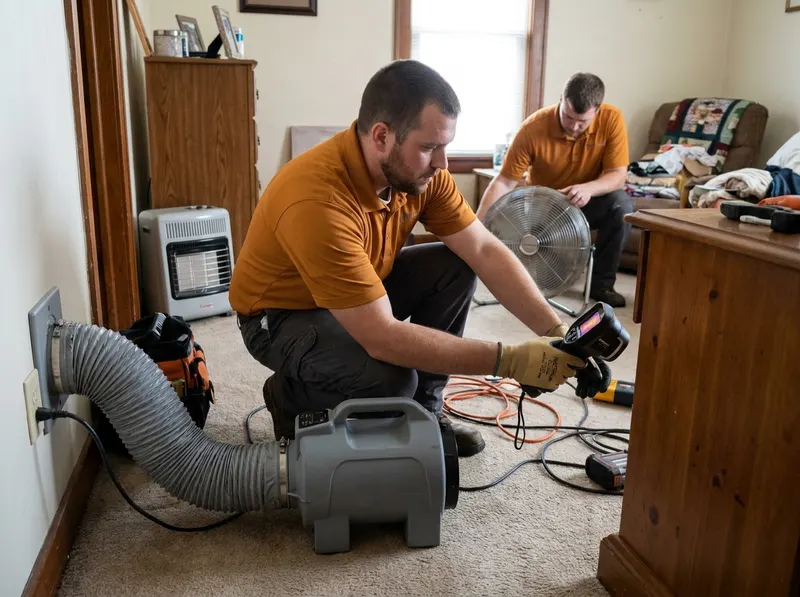
Bed bug infestations demand a comprehensive, lethal thermal approach combined with targeted non-repellent applications to eliminate all biological life stages, including heat-resistant eggs. Specialized industrial convective heating units raise ambient room temperatures to lethal zones between 120 and 135 degrees Fahrenheit, circulating high-volume heated air into wall voids, mattress cores, upholstered furniture frames, and structural baseboard channels. High temperatures denature vital proteins inside nymphs and adult insects while simultaneously desiccating unhatched egg clusters that resist chemical sprays. Following thermal neutralization, technicians apply amorphous silica dusts and long-residual microencapsulated formulations inside electrical faceplates, carpet tack strips, and bed frame joints. This dual-action protocol eliminates surviving stragglers and creates an ongoing physical barrier against reintroduction without saturating personal living areas with volatile chemical residues.
View details →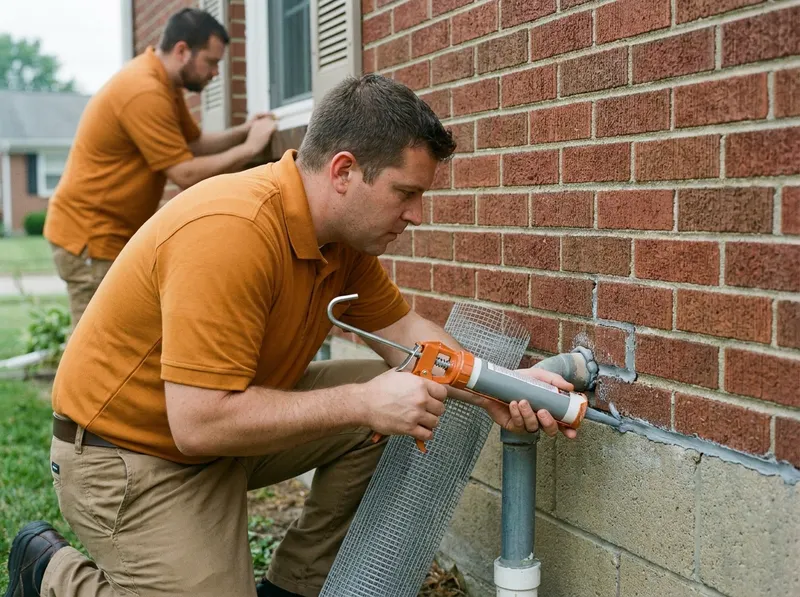
Effective rodent control transitions beyond temporary lethal trapping by physically fortifying the building envelope against Norway rats and house mice. Technicians perform comprehensive diagnostic sweeps identifying all structural entry points larger than one-quarter of an inch, including foundation weep holes, deteriorated cellar window frames, plumbing chase penetrations, utility conduits, and roofline soffit gaps. Technicians seal low-level masonry openings using rust-proof copper mesh, galvanized wire fabric, and expanding polyurethane elastomeric foams that rodents cannot gnaw through. Interior attic and crawl space zones receive targeted placement of covered, tamper-resistant mechanical traps to extract any animals stranded within the structure. Heavily soiled nesting sites, contaminated fiberglass insulation, and pheromone trails are sanitized with hospital-grade antimicrobial agents to eliminate biological attractants and airborne pathogen risks.
View details →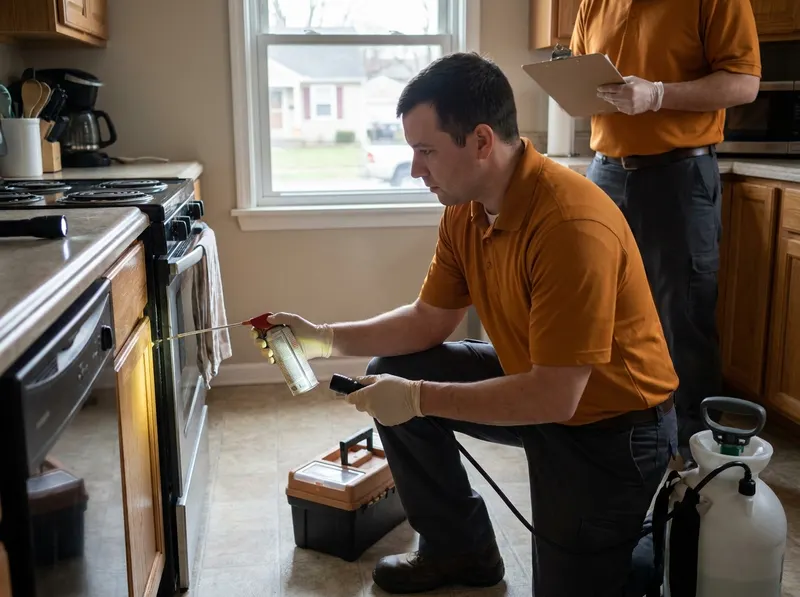
German cockroaches multiply rapidly in warm, high-humidity microclimates such as behind kitchen appliances, within motor housings of refrigerators, and inside hollow cabinetry framework. Remediation begins with high-efficiency particulate air (HEPA) vacuum extraction to remove aggregate clusters of nymphs, adults, and allergen-laden cast skins from harborages. Technicians apply targeted non-volatile bait matrices containing indoxacarb or dinotefuran directly into inaccessible structural cracks, hinges, and drawer glides. These precision placements take advantage of cockroach coprophagy and necrophagy to propagate the active toxicant throughout the hidden breeding harborages. Simultaneously, insect growth regulators containing pyriproxyfen or hydroprene are dispersed within dark voids, sterilizing surviving adults and halting the sexual maturation of nymphs to collapse the population reproductive curve permanently.
View details →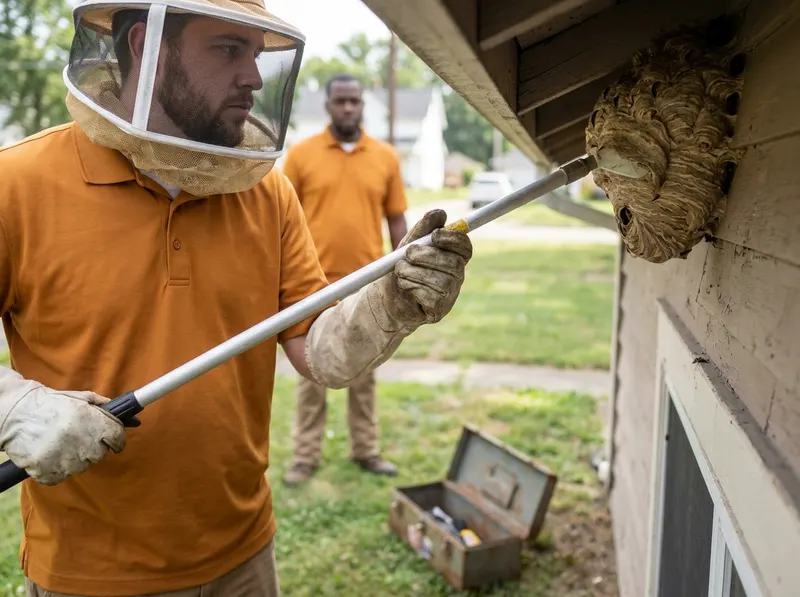
Stinging insect infestations involving bald-faced hornets, paper wasps, aerial yellowjackets, and ground-nesting yellowjacket colonies present acute physical hazards to occupants and pets. Technicians employ specialized personal protective suits and telescoping pressurized delivery tools to inject targeted insecticidal dusts and knockdown sprays directly into nest entrances. In ground burrows and structural wall voids, micro-aerosol formulations quickly neutralize defensive guard wasps before the entire internal comb architecture is mechanically extracted. Once activity is completely terminated, technicians physically remove the exterior paper or mud envelope, scrape anchoring surfaces clean, and treat the underlying substrate with botanical residual deterrents to prevent future queens from constructing secondary nests in the exact same architectural niches.
View details →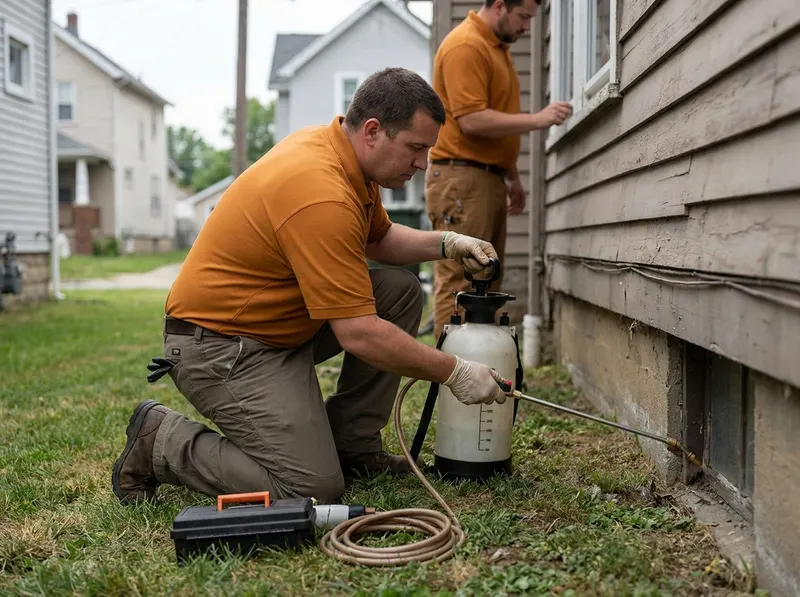
Carpenter ants excavate smooth nesting galleries inside structural timbers, damp wall framing, window sill headers, and foam insulation boards. Technicians identify moisture entry points and fungal decay zones that attract parent colonies before tracking foraging trails back to satellite nests inside interior wall cavities. Specialized void injection tips deliver micro-metered non-repellent dusts and expanding foams directly into excavated wooden galleries, eliminating parent queens and brood clusters on contact. Exterior perimeters receive targeted liquid barrier applications around foundations, rooflines, and utility penetrations, intercepting foraging worker trails connecting outside trees to the home. Technicians provide clear property recommendations regarding overhead branch trimming and wood-to-ground contact abatement to remove natural structural bridges.
View details →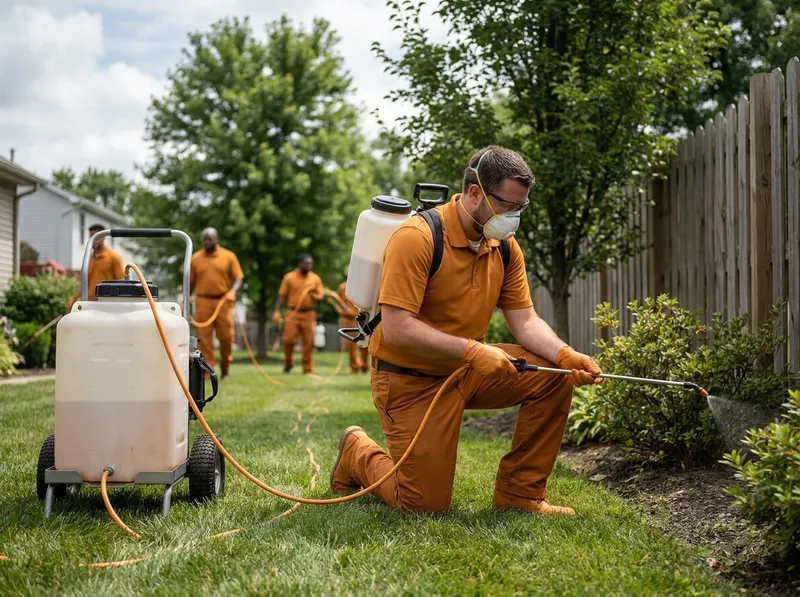
Flea and tick populations thrive in transitional yard zones, dense ground covers, leaf litter beds, and shaded perimeter turf where domestic pets and urban wildlife forage. Technicians use professional hydraulic misting rigs and low-pressure broadcast sprayers to apply combination adulticide and juvenile hormone regulator treatments across high-risk vegetative zones. Treatments penetrate heavy thatch and underbrush, exterminating active adult blacklegged ticks, dog ticks, and cat fleas while preventing deposited eggs and larvae from maturing. Foundation perimeters, patio borders, and under-deck voids receive focused barrier applications that arrest crawling parasites before they latch onto domestic animals or migrate past exterior thresholds into interior carpet and upholstery fibers.
View details →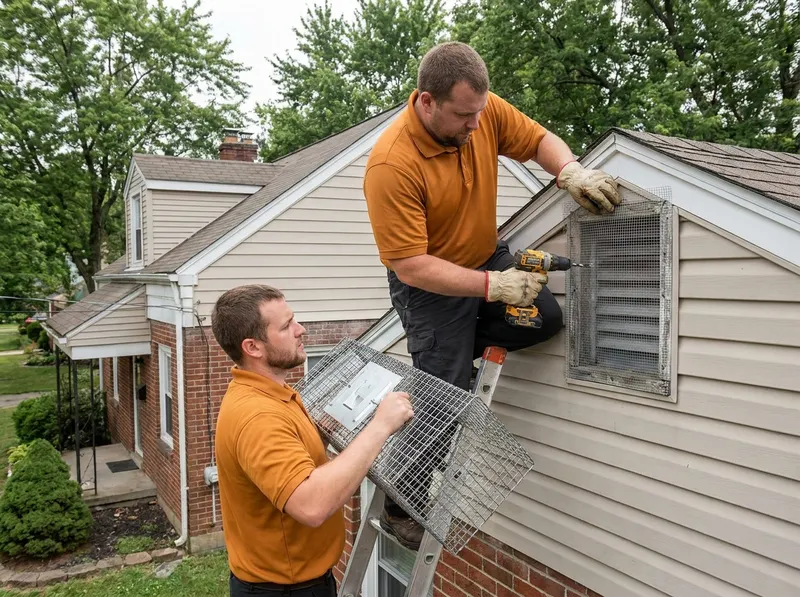
Nuisance wildlife incursions by raccoons, eastern gray squirrels, and bats cause severe attic insulation displacement, chewed electrical wiring, and heavy guano or fecal accumulation. Technicians conduct roof-level diagnostic inspections to identify compromised ridge vents, unshielded gable louvers, rotten fascia boards, and chimney flues exploited by invading animals. Heavy-gauge galvanized steel hardware cloth (19-gauge, 1/4-inch mesh) and custom metal flashing are installed over secondary entry points, while active primary exits are outfitted with precision one-way exclusion doors. Trapping sequences adhere to state wildlife guidelines, capturing and removing nuisance animals humanely. Once animals are confirmed excluded, technicians execute targeted biological decontamination and insulation remediation to restore attic air quality.
View details →A professional pest control service in Dayton is a targeted structural and biological management intervention that identifies, eradicates, and mechanically excludes invasive insect and rodent populations from residential and commercial properties.
You get a firm, itemized quote for your pest control service before any work begins — no surprises, no pressure.
Careful prep, tidy work, and a full cleanup when we are done. We treat your home and belongings like our own.
The same trusted, background-checked team from the first call to the final check.
Selecting the proper remediation methodology depends on the biological lifecycle of the target pest, the architectural vulnerability of the structure, and the severity of colonization. If dealing with persistent indoor populations like German cockroaches or bed bugs, choose thermal remediation or insect growth regulators over topical aerosol sprays to halt reproductive cycles across every developmental stage; topical sprays merely provoke dispersal into wall cavities without killing hidden oothecae. If managing wood-destroying organisms like subterranean termites or carpenter ants, choose targeted liquid perimeter barriers and localized baiting systems rather than broad-spectrum repellents, because non-targeted sprays scatter satellite colonies further into structural framing while non-repellent transfer chemistry carries active agents directly to the queen. If rodent incursions penetrate aged masonry or fieldstone foundations, choose comprehensive mechanical exclusion using copper mesh, heavy-gauge steel hardware cloth, and elastomeric sealants rather than relying strictly on exterior poison bait stations; exclusion stops ongoing ingress permanently, whereas exterior poison baiting alone risks dead rodents decaying within inaccessible interior drywall cavities. For exterior stinging insects or seasonal perimeter invaders, targeted localized knockdown and void dusting deliver immediate physical safety without broad environmental exposure, whereas continuous calendar spraying creates unnecessary chemical runoff along municipal waterways.
Every project gets a firm, written price after a free on-site visit. Ranges below for orientation.
Tell us about your pest control service job and we'll send a clear, written quote — usually the same day. Or just call and talk to a real Dayton pro.
(937) 637-0033
Dayton properties face distinct pest pressures shaped by the regional hydrology of the Great Miami River basin, the confluence of the Mad and Stillwater rivers, and the prevalence of late nineteenth- and early twentieth-century architecture. Neighborhoods like the Oregon District, South Park, and Dayton View Historic District feature historic brick and fieldstone rubble foundations where aged lime mortar frequently degrades over decades of seasonal freeze-thaw cycles. These mortar gaps and settled sandstone sills create unhindered subterranean highways for Norway rats and mice seeking shelter when temperatures plummet during autumn across Montgomery County. High summertime relative humidity levels along the river corridors accelerate moisture retention in unvented crawl spaces and dirt cellars throughout Historic Inner East and Five Oaks, creating fertile micro-climates for subterranean termites and wood-destroying fungi. In residential areas characterized by mature oak and maple tree canopies, such as Belmont, Patterson Park, Shroyer Park, and zones bordering Woodland Cemetery and Arboretum and Carillon Historical Park, carpenter ant colonies regularly establish satellite nests in roof eaves, soffits, and decayed fascia boards where overhanging branches touch the structural envelope.
Free estimates for Dayton & the surrounding area.
 Alernov Pest Control Services